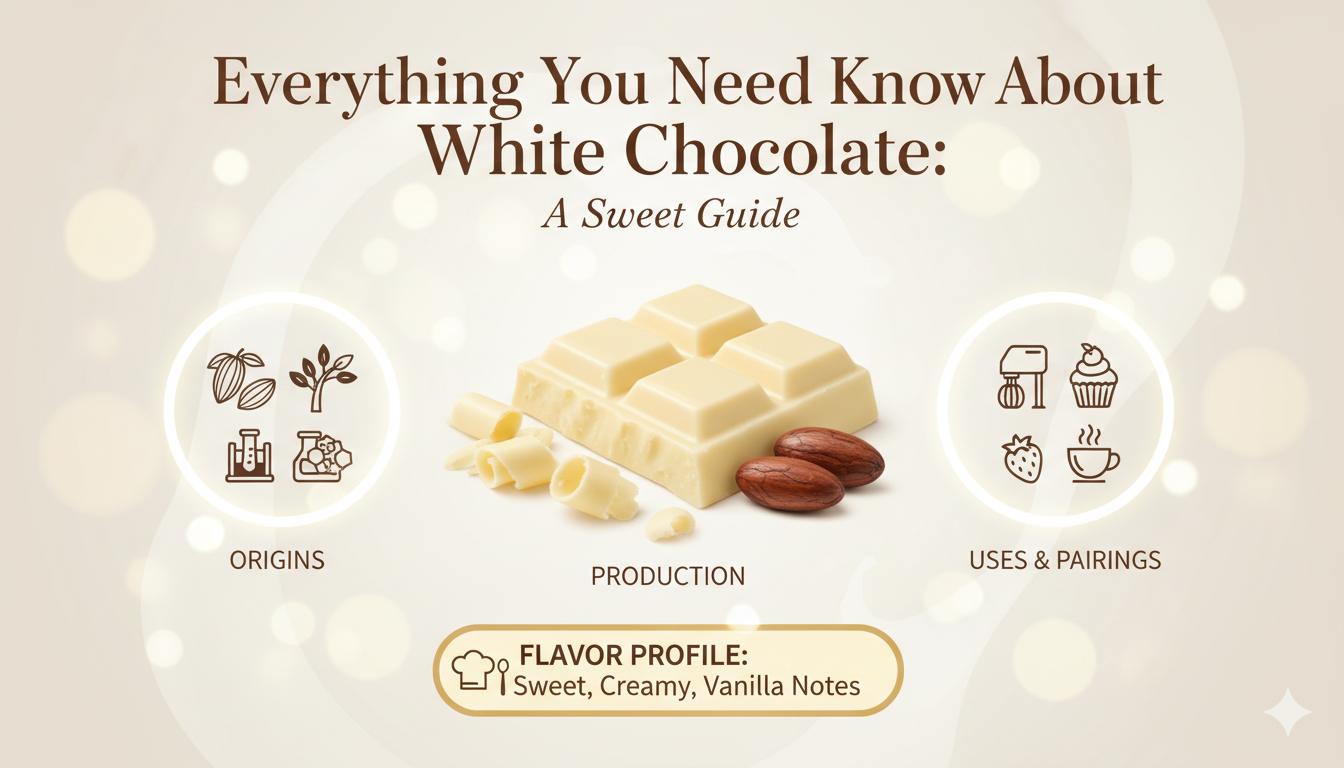
When you think of a sweet treat, white chocolate often comes to mind. It has a creamy texture and a very pale color. Many people wonder if it is actually “real” chocolate. To be called white chocolate in the United States, it must contain at least 20% cocoa butter. It also needs milk solids and sugar. Unlike dark or milk chocolate, it does not have cocoa solids. These solids are what give other chocolates their brown color and bitter taste. Because it only uses the fatty part of the bean, it stays ivory-colored and tastes like sweet vanilla.
I remember the first time I tried a high-quality bar. It didn’t taste like candy; it tasted like rich, velvety butter. This unique makeup is why it melts so differently than other sweets. It is very delicate because of the high fat content. When you eat it, you are mostly tasting the quality of the cocoa butter and the milk used. It is a favorite for people who love smooth, mellow flavors without the “bite” of dark cocoa.
How Is White Chocolate Made?
The journey of white chocolate starts with the cacao bean. Farmers harvest these beans and ferment them to develop flavor. After roasting, the beans are pressed until the fats separate from the solids. This fat is called cocoa butter. To make a batch of white chocolate, makers mix this ivory butter with sugar, milk powder, and often a touch of vanilla. They stir and heat the mixture in a process called conching. This makes the texture incredibly smooth and gets rid of any grittiness.
Good makers focus on using deodorized cocoa butter to keep the flavor clean. If you look at the ingredients on a cheap bar, you might see vegetable oils. True white chocolate should never have those. It relies entirely on the natural fats from the cacao plant. This is what gives it that signature melt-in-your-mouth feeling. It takes a lot of skill to balance the sugar so it isn’t too sweet. When done right, it is a masterpiece of candy making that highlights the softer side of the cacao harvest.
Is It Actually “Real” Chocolate?
This is a big debate in the food world! Technically, white chocolate does not have cocoa liquor or powder. This is why some purists say it isn’t “real.” However, it comes from the exact same cacao pod as dark chocolate. Since it uses cocoa butter, most experts and government agencies count it as a chocolate product. It is just a different part of the plant. Think of it like a different version of the same story. It offers the richness of cacao without the heavy, earthy tones found in a dark bar.
In my experience, calling it “fake” misses the point of how hard it is to produce. High-quality cocoa butter is actually very expensive. In fact, it is often the most valuable part of the bean! So, when you enjoy white chocolate, you are eating a premium ingredient. It has a legal definition that brands must follow to use the name. If a bar uses palm oil instead of cocoa butter, it must be labeled as “coating” or “candy.” Always check the label to ensure you are getting the real thing.
The Best Ways to Use White Chocolate in Baking
Baking with white chocolate is a fun way to add creaminess to your desserts. It pairs perfectly with tart fruits like raspberries or lemons. Because it is so sweet, it balances out sour flavors very well. You can chop it into chunks for cookies or melt it down for a silky ganache. However, you must be careful when heating it. It can burn much faster than dark chocolate. I always recommend using a double boiler or very short bursts in the microwave.
One of my favorite tricks is to use it as a drizzle over dark brownies. The contrast in color looks professional and tastes amazing. You can also mix it into macadamia nut cookies for a classic treat. If you are making a mousse, white chocolate provides a stable structure while keeping the dessert light. Just remember that it adds a lot of sugar to your recipe. You might want to reduce the extra sugar in your dough to keep things balanced. It is a versatile tool for any home baker.
Understanding the Ingredients List
When you buy a bar of white chocolate, the label tells a story. The first ingredient is usually sugar, followed by cocoa butter and milk. You might also see lecithin, which is an emulsifier. This ingredient keeps the fats and solids from separating. Natural vanilla is another common addition that enhances the creamy scent. If you see “vanillin” instead, that is a synthetic flavor. It is usually a sign of a lower-quality product. Real ingredients lead to a much better eating experience.
I always tell people to look for a short ingredients list. The fewer chemicals you see, the better the white chocolate will taste. High-quality bars often list the percentage of cocoa butter right on the front. Avoid anything that mentions “hydrogenated oils.” These oils change the texture and leave a waxy film on the roof of your mouth. A good bar should feel like it is disappearing the moment it touches your tongue. That instant melt is the hallmark of real, high-grade ingredients working together perfectly.
Comparing White, Milk, and Dark Chocolate
Each type of chocolate has its own personality. Dark chocolate is bold and can be quite bitter. Milk chocolate is a middle ground with a creamy, caramel-like taste. White chocolate is the sweetest and mildest of the trio. It lacks the flavonoids found in cocoa solids, which are the parts linked to health benefits. However, it excels in texture. While dark chocolate has a “snap,” this variety is soft and pliable. This makes it much easier to pipe into shapes or use for delicate decorations on cakes.
In a professional kitchen, we choose the type based on the goal of the dish. If we want a deep, earthy flavor, we go dark. If we want something nostalgic, we go with milk. We choose white chocolate when we want a buttery, luxurious mouthfeel. It acts as a blank canvas for other flavors. You can even “toast” it in the oven to give it a caramelized, nutty taste. This process is called browning, and it turns the bar into something that tastes like shortbread. It is truly a unique ingredient in the culinary world.
Tips for Melting Without Burning
Melting white chocolate can be tricky for beginners. Because it has a low burning point, high heat is its enemy. If it gets too hot, it will “seize” and turn into a dry, clumpy mess. To avoid this, always chop your chocolate into very small, even pieces. This helps it melt quickly and evenly. If you use a microwave, set it to 50% power. Stir the pieces every 15 seconds, even if they don’t look melted yet. The residual heat will do most of the work for you.
Using a double boiler is the safest method. Place a bowl over a pot of simmering water, but make sure the water does not touch the bottom of the bowl. The gentle steam will warm the white chocolate slowly. Be very careful not to let even a single drop of water fall into the bowl. Water causes the sugar and fats to bind together in a bad way. If you stay patient and keep the heat low, you will end up with a smooth, liquid gold consistency. This is perfect for dipping strawberries or pretzels.
Why Is White Chocolate Sometimes Yellow?
You might notice that some white chocolate looks very white, while others look more ivory or yellow. The color usually tells you about the cocoa butter. Natural, unrefined cocoa butter has a pale yellow tint. This is a sign of a high-quality product that hasn’t been overly processed. If the chocolate is stark white, the cocoa butter might have been bleached or deodorized heavily. It could also mean the brand used more fillers and less actual cacao fat.
When I shop, I actually look for that slightly yellow or “off-white” color. It suggests a richer flavor and a more natural production process. Milk solids also play a role in the final color. Different types of milk powder can change the shade of the white chocolate. Some brands use goat milk or high-fat cream powder, which adds to the golden hue. Don’t be afraid of a little color! It often means you are about to enjoy a much more complex and delicious treat than a bright white alternative.
Fun Facts About Your Favorite Sweet
There are many interesting stories behind white chocolate. It was first created in Switzerland in the 1930s. A company called Nestlé wanted to find a way to use up extra cocoa butter. They made a bar called the Milkybar, which became famous all over the world. Since then, it has become a staple in candy aisles everywhere. Even though it started as a way to reduce waste, it evolved into a luxury item. Today, some of the most expensive confections in the world are made using rare cocoa butter.
Did you know that white chocolate can actually take on other colors very easily? Because it is so light, you can add food coloring to create vibrant blues, pinks, or greens. This makes it a favorite for holiday treats and birthday parties. You can also infuse it with herbs like lavender or matcha powder. The fat in the white chocolate carries these scents and flavors beautifully. It is a very “social” ingredient that plays well with almost any spice or extract you can imagine.
How to Store It Correctly
Proper storage is the key to keeping your white chocolate fresh. It is very sensitive to light, air, and strong smells. Because of its high fat content, it can actually “soak up” odors from your kitchen. If you leave it near onions or spices, it might start to taste like them! Always keep it in a cool, dark, and dry place. A pantry is usually better than a refrigerator. If you must use the fridge, wrap it tightly in foil and put it in an airtight container to block out moisture.
If stored correctly, white chocolate can last for about six months to a year. Over time, it might develop a white coating called “bloom.” This happens when the fats rise to the surface due to temperature changes. It doesn’t mean the chocolate is bad! You can still melt it down and use it for baking. However, for eating plain, fresh is always best. Keep your stash tucked away from the sun so it stays smooth and delicious for whenever your sweet tooth hits.
A Detailed Look at White Chocolate
| Feature | Description |
| Main Ingredient | Cocoa Butter (at least 20%) |
| Color | Ivory to Pale Yellow |
| Taste Profile | Sweet, Vanilla, Creamy, Buttery |
| Melting Point | Very Low (approx. 82°F to 97°F) |
| Common Uses | Baking, Ganache, Dipping Fruit, Decorative Piping |
| Best Pairings | Raspberries, Macadamia Nuts, Matcha, Sea Salt |
Frequently Asked Questions (FAQs)
1. Can vegans eat white chocolate?
Standard white chocolate contains milk, so it is not vegan. However, many brands now make vegan versions using cocoa butter mixed with rice milk or almond milk powder. Always check the label for dairy-free certifications.
2. Does white chocolate have caffeine?
Unlike dark chocolate, white chocolate has almost zero caffeine. Caffeine is found in the cocoa solids, which are removed during the making of this treat. It is a great choice for a late-night snack if you are sensitive to stimulants.
3. Why did my chocolate turn lumpy when melting?
This is called “seizing.” It usually happens if a tiny bit of water gets into the bowl or if the heat was too high. You can sometimes fix it by stirring in a teaspoon of vegetable oil, but it may not be perfectly smooth again.
4. Is white chocolate good for you?
It is a high-energy food with a lot of sugar and fat. While it doesn’t have the antioxidants of dark chocolate, it provides calcium from the milk solids. It is best enjoyed as an occasional treat in a balanced diet.
5. What is “Compound” white chocolate?
Compound chocolate replaces cocoa butter with cheaper vegetable fats like palm oil. It is easier to work with because it doesn’t need tempering, but it doesn’t have the same rich flavor or smooth melt as the real version.
6. Can I swap white chocolate for milk chocolate in recipes?
Yes, but be careful! White chocolate is sweeter and melts faster. You might need to reduce the sugar in the rest of your recipe to make sure the final dish isn’t overwhelming.
Conclusion: Embrace the Creamy Sweetness
In the end, white chocolate is a unique and wonderful part of the confectionery world. Whether you are using it to create a fancy cake or just enjoying a square as a snack, its creamy texture is hard to beat. By choosing high-quality bars with real cocoa butter, you ensure the best flavor and experience. It is a versatile ingredient that brings joy to many people around the globe. So, next time you are in the baking aisle, grab a bar and try something new!